Xavier Collins
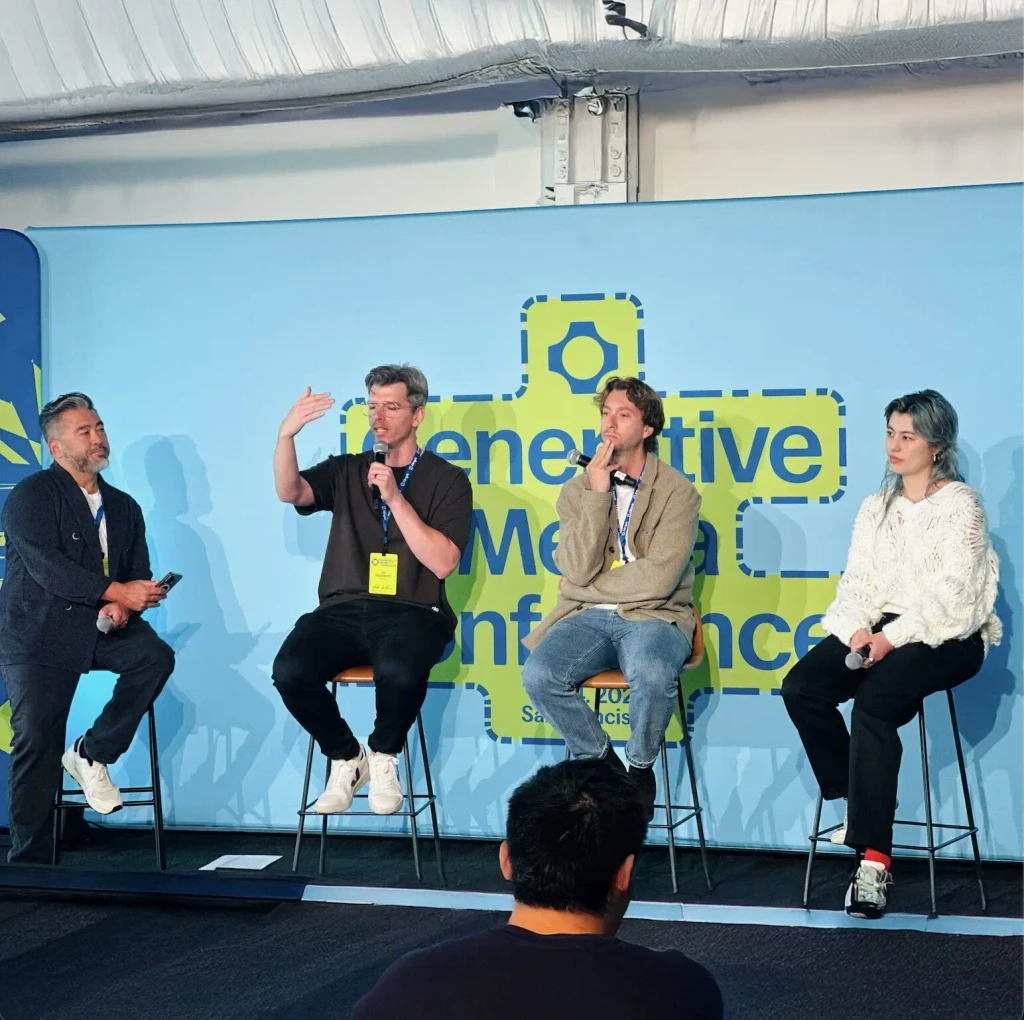
The AI-Native Production Pipeline - Xavier Collins at the FAL Generative Media Conference
The tools are the easy part. In a room full of companies building generative media infrastructure, the harder question is who actually knows what to do with it all.
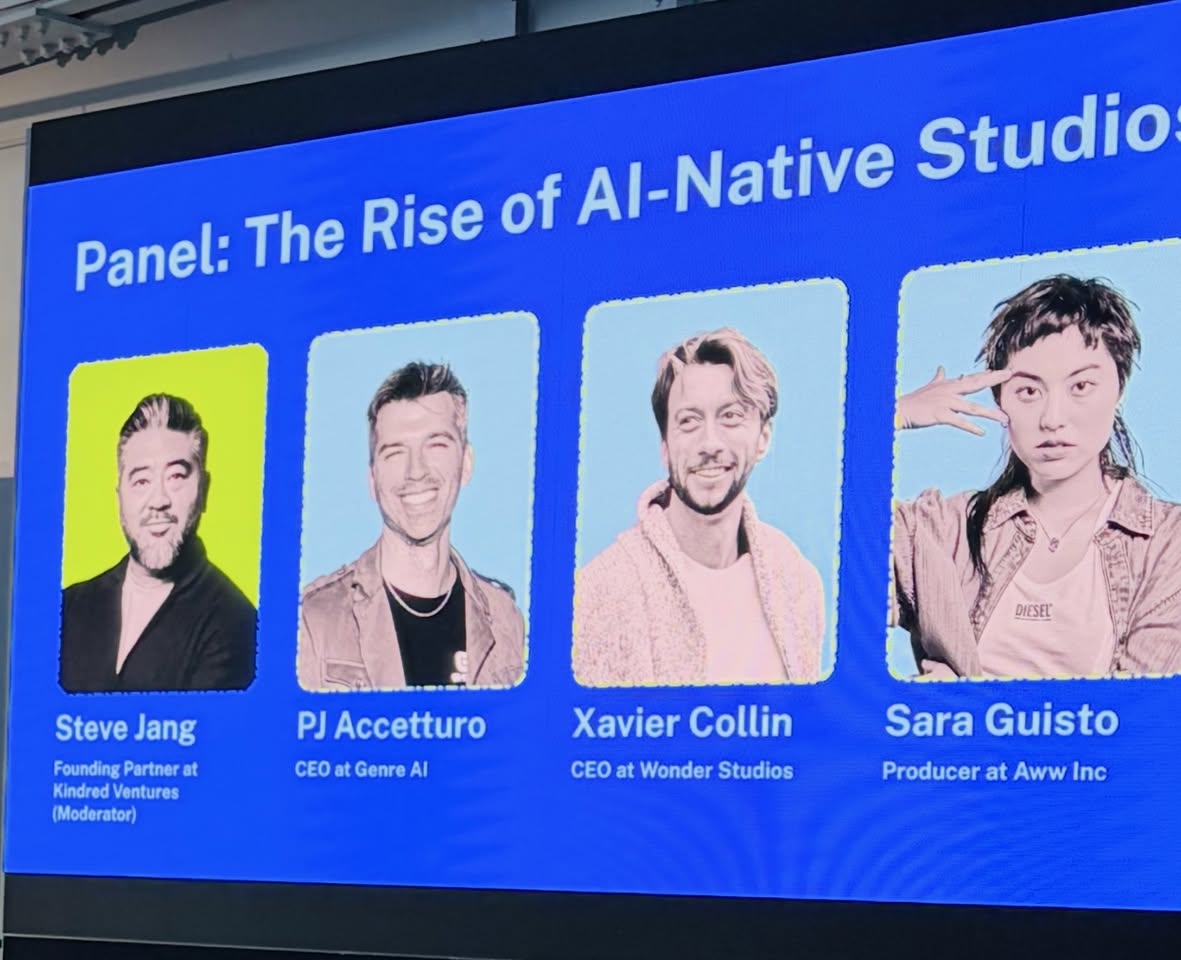
Xavier explored that question at the FAL Generative Media Conference, on a panel with PJ Accetturo from Genre.ai and Sara Giusto from Aww.
What AI-native production actually looks like
Wonder is tool-agnostic. We work with whoever is building the best tools at any given moment, and that changes constantly - FAL, Freepik, Kling, ElevenLabs.
The tools in use six months ago aren’t the tools in use now. Justin comes from traditional filmmaking and is focused on making these tools usable for people crossing over from that world. The actual pipeline looks surprisingly like a traditional production house, just with different software at each stage.
PJ Accetturo put it well:
“It’s easy to teach tools, really hard to teach taste.”
That tracks with everything we’ve seen at Wonder so far. The people making the best work with AI are the ones who already had the creative instincts. You can learn the technology in a few weeks. The eye for what works? You either have it or you don’t.
Hybrid wins, and here’s the proof
Everyone says “hybrid” now. Xavier’s position is that the next two years will prove it out. But the word is meaningless unless you can point at actual projects. He pointed at two.
Wonder produced Lewis Capaldi’s recent music video with Google DeepMind, leaning heavily on Google’s tools with a film made almost entirely with AI. Then Universal came back and said they wanted some live action in there.
So the opening few seconds are actually Wonder’s head of social media walking across a bridge in London, with the video projected onto a building, and then it morphs into the AI piece.
The bigger the company, the more they’re thinking about copyright, process documentation, and liability. Those are real questions and the answers are still being worked out across the industry.
The second example was a documentary reconstruction project that Wonder has been working on. The director wanted to reconstruct what the nineties were actually like in an office environment. There were detailed stories from people who were there, but no archival footage existed. So Wonder used AI to build era-accurate reconstructions and de-age some of the interview subjects back to how they looked decades earlier.
The documentary itself is still character-led with a proper narrative arc. AI solved a specific problem that traditional production couldn’t: there was no footage, and now there is.
A traditional director and a traditional producer looked at the tools, saw what they could do, and said yes. That’s perhaps how adoption will play out more broadly; filmmakers deciding AI is useful for specific problems, rather than AI enthusiasts trying to become filmmakers. Xavier covered similar territory in his Day One FM interview, where he breaks down how AI unlocks projects the old economics wouldn’t support.
The cost stack is different now
Given Xav’s marketplace background, he thinks about this structurally. The cost of getting an idea to market, testing it, seeing if it works, has properly changed. The knock-on effects are what interest him most.
Creativity benefits from rapid iteration, and being able to test something quickly, see the result, try again. That cycle used to cost serious money in production. You had to commit substantial budget before you even knew if something was going to work.
Now the gating factor is shifting.
It’s less about budget and more about whether the idea is actually good enough. That’s a different kind of filter, and in Xavier’s view it favours people with taste and instinct over people with deep pockets alone.
On the services side, Wonder hasn’t had to do outbound sales. Clients just started emailing the hello@wonderstudios.com address as soon as Wonder came out of stealth.
Xavier sees that as a clear signal of product-market fit. Having worked at companies that burned through cash before finding fit, he was intentional from the start about building a flywheel on the services side that could fund the IP investments on the other.
Taste is the gating factor, not tools
What makes our output good comes down to people.
A great marketplace always needs quality supply. OpenAI reached out to. Justin years ago as a filmmaker and he started experimenting with the earliest GenAI tools. He found other creatives who were interested and started building a community called Real Dreams. Being a nucleus for the best talent in the space is a real advantage.
The tools move fast and we’re lucky to work closely with most of the top companies building them. But tools are the learnable part. What you can’t easily replicate is what a good filmmaker or director walks into a room with: the sense of story, the instinct for what a scene needs.
That’s why we’re focused on bringing people over from the traditional industry. If the tools are accessible enough, creative people spend their time on creative decisions instead of fighting the software.
The filmmaker as entrepreneur
Xavier has a clear thesis on where entertainment is heading, and it’s the thesis that underpinned Wonder’s twelve million dollar seed round.
Barry Diller pioneered the made-for-TV movie - content moving from cinema to television. The current shift is the next version: television and streaming compressing down to phone and social. You can see it in the rise of micro dramas, and in how people watch episodic series on their phones.
Then there’s the production side. YouTube democratised distribution. Overnight, anyone could have their own TV channel. AI is doing the equivalent for production, lowering the barriers to what used to require a Hollywood budget.
Put those two together and it gets interesting. An Oscar-winning director with a piece of IP that never fitted the traditional studio model can now bring it to life as an episodic series streamed wherever audiences are. Individual filmmakers can spin up their own IP and reach global audiences without needing a studio greenlight. Xavier expects to see a lot of that in the next couple of years.
Jeffrey Katzenberg said it that morning at the same conference: “there’s something brewing.” He couldn’t quite name it. That’s usually the inflection point. What’s brewing isn’t any single company. It’s a structural rearrangement of who can make what. The studio system evolved around scarcity of production capability. When that scarcity dissolves, the value chain rearranges around talent and taste instead. That’s the bet Wonder has made with its $12M seed, and the FAL panel was full of companies making related bets from different angles.
That’s the world Wonder is building for. On the services side, the studio works with traditional producers and directors who want to learn these tools - through live workshops and direct collaboration - and make things that weren’t previously feasible.
On the IP side, through Beyond the Loop and the originals programme, Wonder is testing what it looks like when filmmakers own their work and build audiences directly. Each side of the business strengthens the other.
Our portfolio shows what’s really possible with AI-native production.
And our community is open and growing. Join us.