Justin Hackney
Where Human Judgment Still Does the Heavy Lifting.
When we started working on the film for Something in the Heavens, our focus was purely on the creative process – we weren’t trying to prove a point about AI.
We were trying to make a video that felt right for the song.
Lewis Capaldi’s music is emotional without being loud. It’s subtle, but it carries weight. So the brief was simple, and yet not easy: build visuals that feel expansive, without ever overpowering the emotion.
That’s where a hybrid approach helped us. It wasn’t a shortcut; it was a way to explore ideas that would normally be out of reach.
The Creative Core
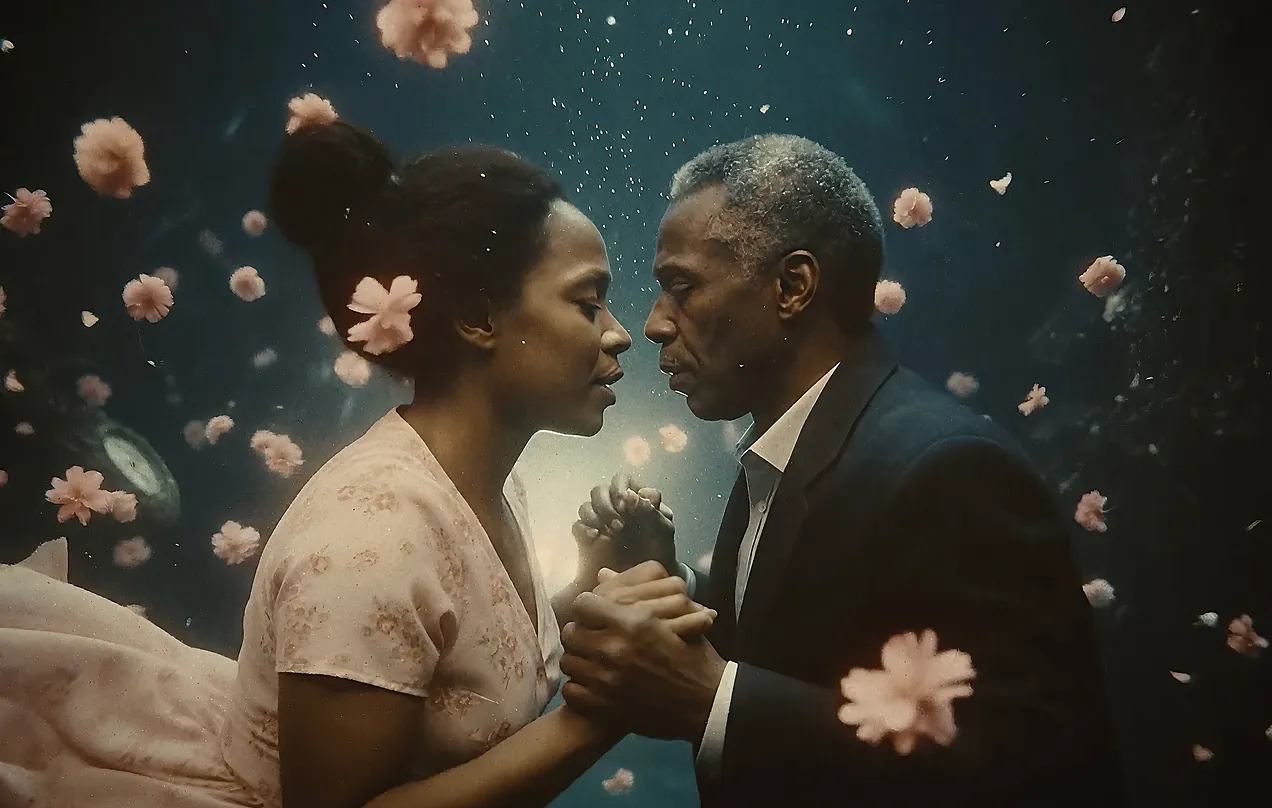
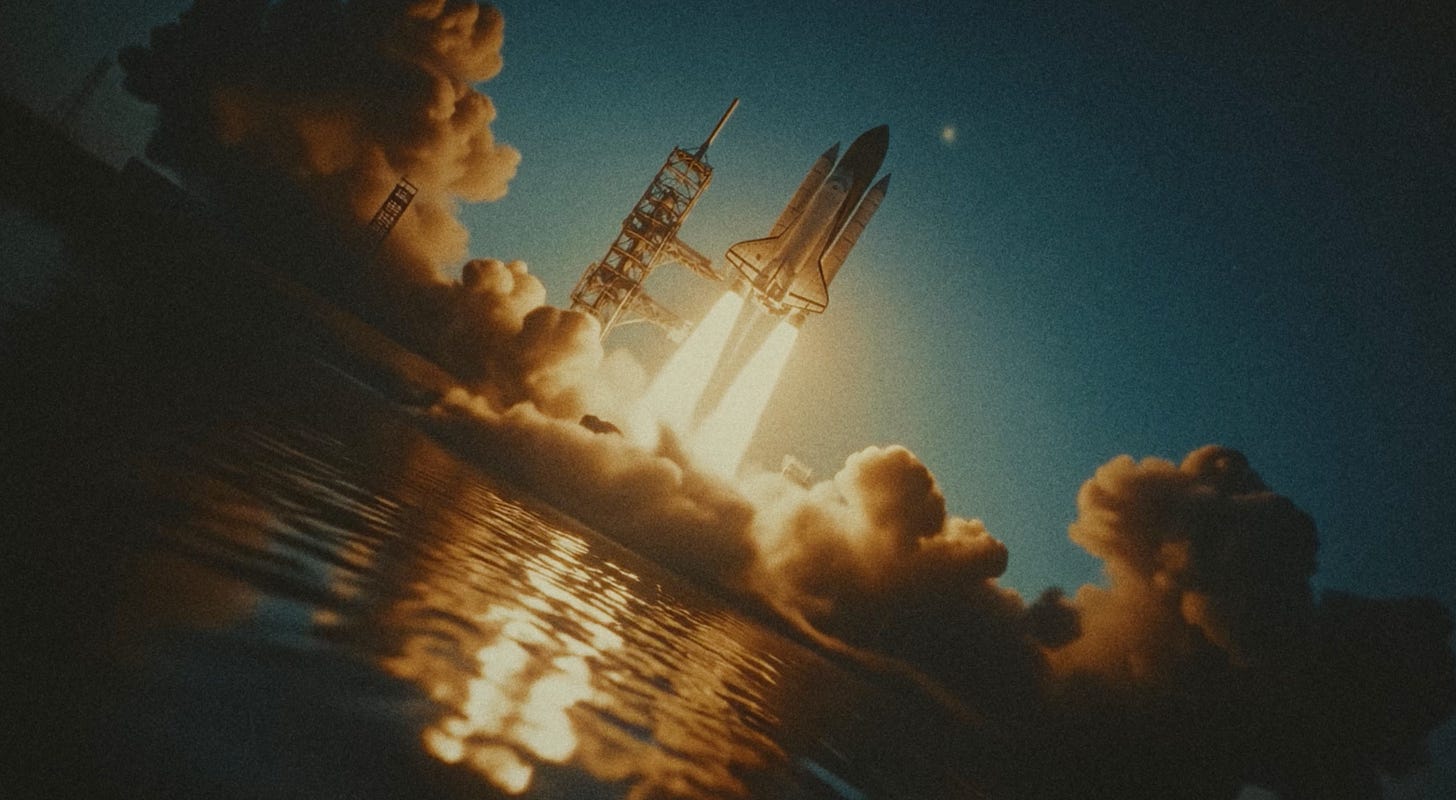
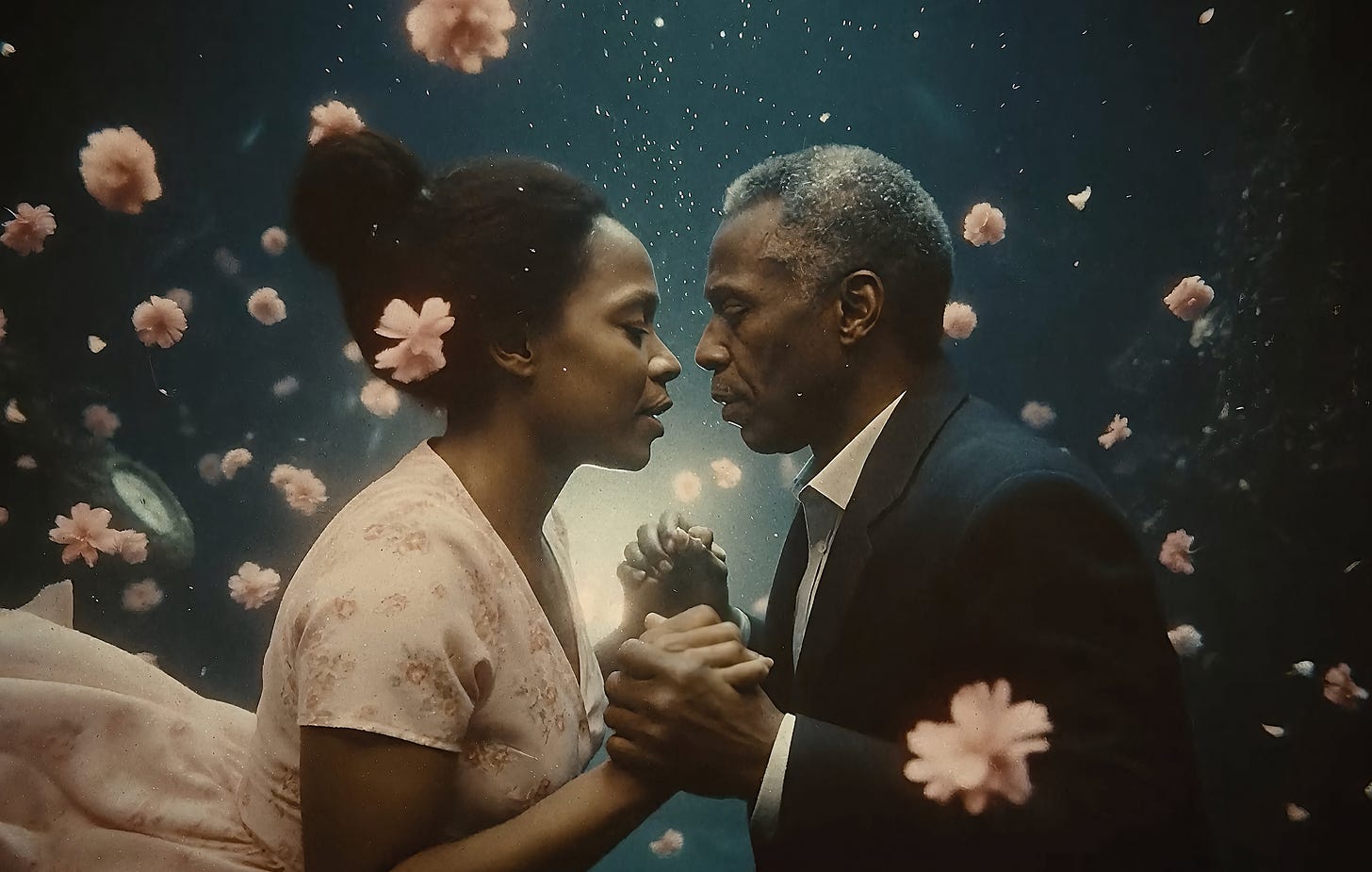
The final film includes sequences that would be incredibly difficult, or simply impossible, to shoot traditionally: tsunamis of water colliding with buildings, expansive space sequences, and surreal floral landscapes shaped entirely by the feeling of the song.
“When I heard the song, ideas surfaced instinctively – fragments of memory, cycles of life, moments that felt grounded and others slightly beyond reach. I knew the emotional journey I wanted to take people on,” says Justin Hackney, CCO of Wonder Studios.
“Flow allowed us to explore those ideas without constraint. There was no sense of limitation, just a fluid back and forth between instinct and image. Impossible shots became accessible, not as spectacle, but as a way to go deeper into feeling.”
Justin Hackney, CCO & Co-Founder - Wonder Studios
Under the direction of Justin, we worked with 8 creative technologists based around the world. We generated a huge amount of material, and then did the most important thing: we threw most of it away.
Often, only one or two sequences out of every hundred generated made the final cut. The job wasn’t generating the images; it was the quiet work of choosing the few that truly served the song.
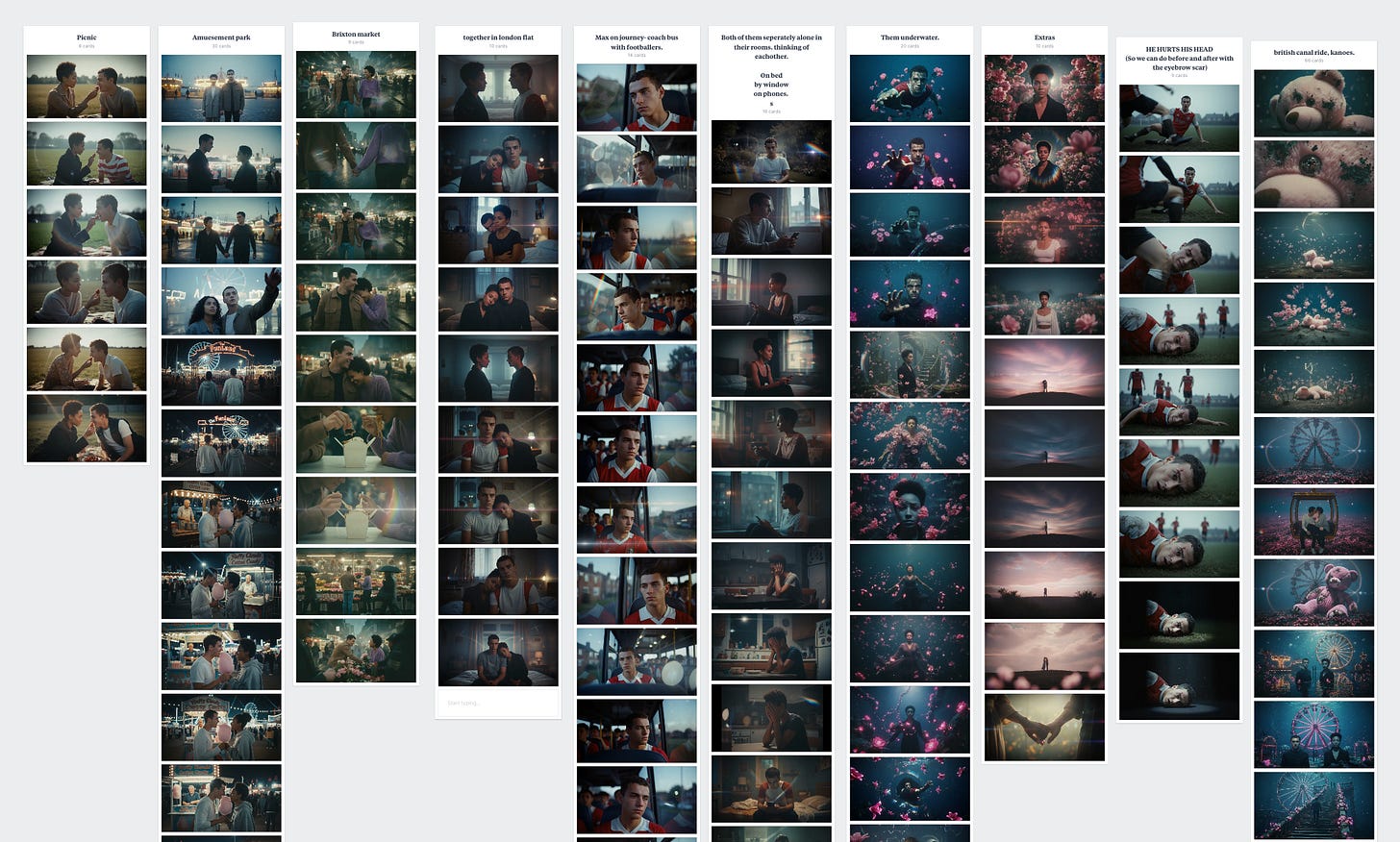
Milanote Board from Production
The Tools and the Craft
We used Google’s Flow filmmaking tools throughout the production process, including Veo 3 for 80-90% of the final video content, Veo 2 for smooth frame-to-frame transitions, and Imagen and Nano Banana for character development and reference-based consistency.
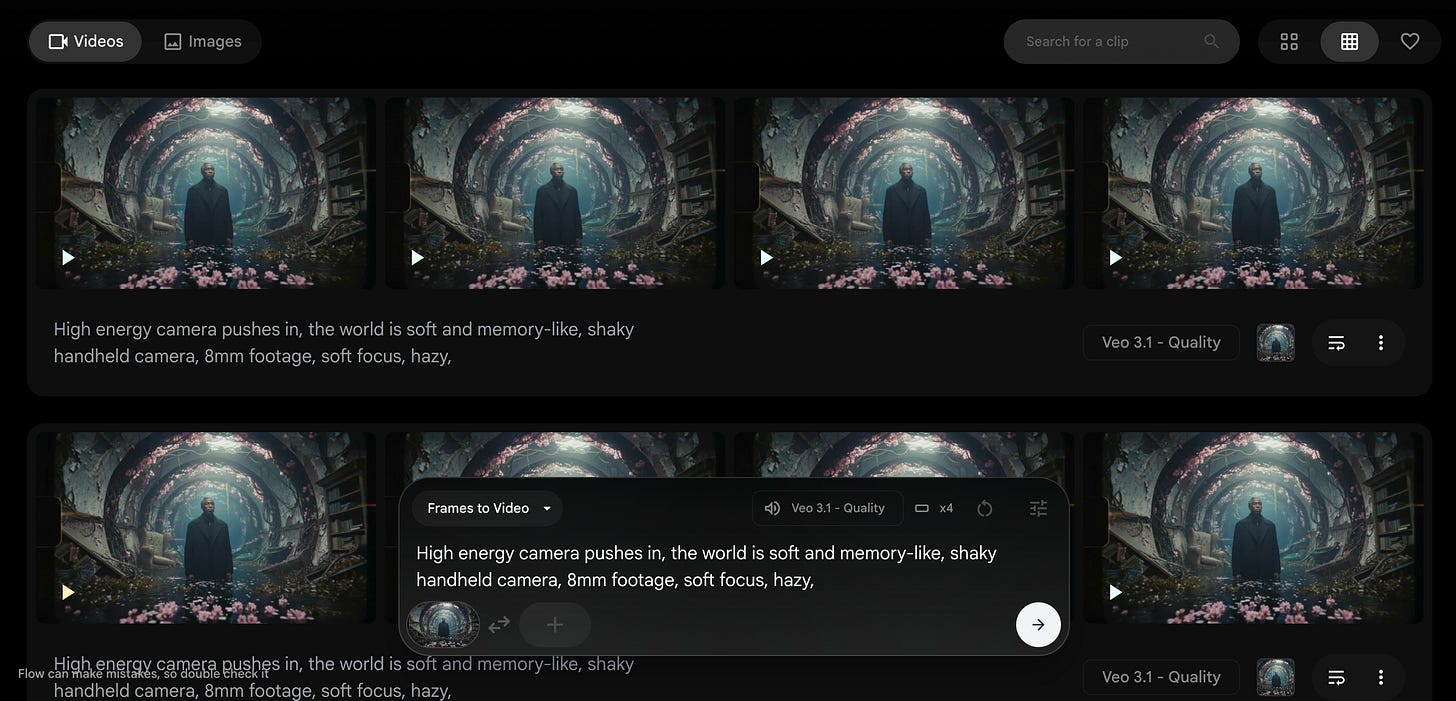
Google Veo 3 Workflow
But the decisions never came from the tools.
They came from the same place they always do: pacing, composition, rhythm, and how a shot makes you feel when paired with music. The tools simply made more options possible.
As Elias Roman, Senior Product Director, Google Labs, put it: “Justin and Wonder Studios have shown what happens when creative tools like Google Flow are in the hands of visionary filmmakers and artists. Well-honed craft gets augmented by new capabilities.”
The Final Step: Going Analogue
Once the digital work was done, we did something counterintuitive. We processed the film through 8mm and 16mm stock, then finished it using traditional editing, sound design, and colour grading.
That physical step mattered more than we expected.
Lewis Capaldi - Something In The Heavens
The grain, the texture, and the small imperfections of the film stock grounded the visuals. It stopped the images from feeling too clean or “perfect,” giving the entire piece a tactile, human edge.
What changed (and What Didn’t)
The entire project took us around two months. A traditional visual production of this scale would typically take much longer…up to 8-12 months.
That shift in timeline is important. It gives artists more room to experiment and iterate without the long timelines or huge upfront commitments traditionally required to explore complex visuals.
This opened more doors for creativity, but the fundamentals didn’t change.
Lewis Capaldi - Something In The Heavens
The video has now passed a million views on YouTube, something we’re really proud of. But what matters more is how we made it.
For example, one of the prompts Justin used focused purely on the camera movements and texture:
“High-energy camera pushes in, soft and memory-like world, shaky handheld movement, 8mm footage, soft focus, hazy.”
Projects like this are central to how we’re building Wonder Studios. The process wasn’t about letting AI take the lead, it was about using it precisely. Hybrid filmmaking works best when the tools simply support the creative process.
Watch Justin Hackney explain more about the process here.
Credits: Yigit Kirca | Billy Boman | Max Larsson | Mark Isle| Giacomo Mallamaci | Bruno Detante | Stephane Benini | Issa Sissoko
The reimagined video for ‘Something in the Heavens’ was made in collaboration with Google DeepMind & YouTube.