Justin Hackney
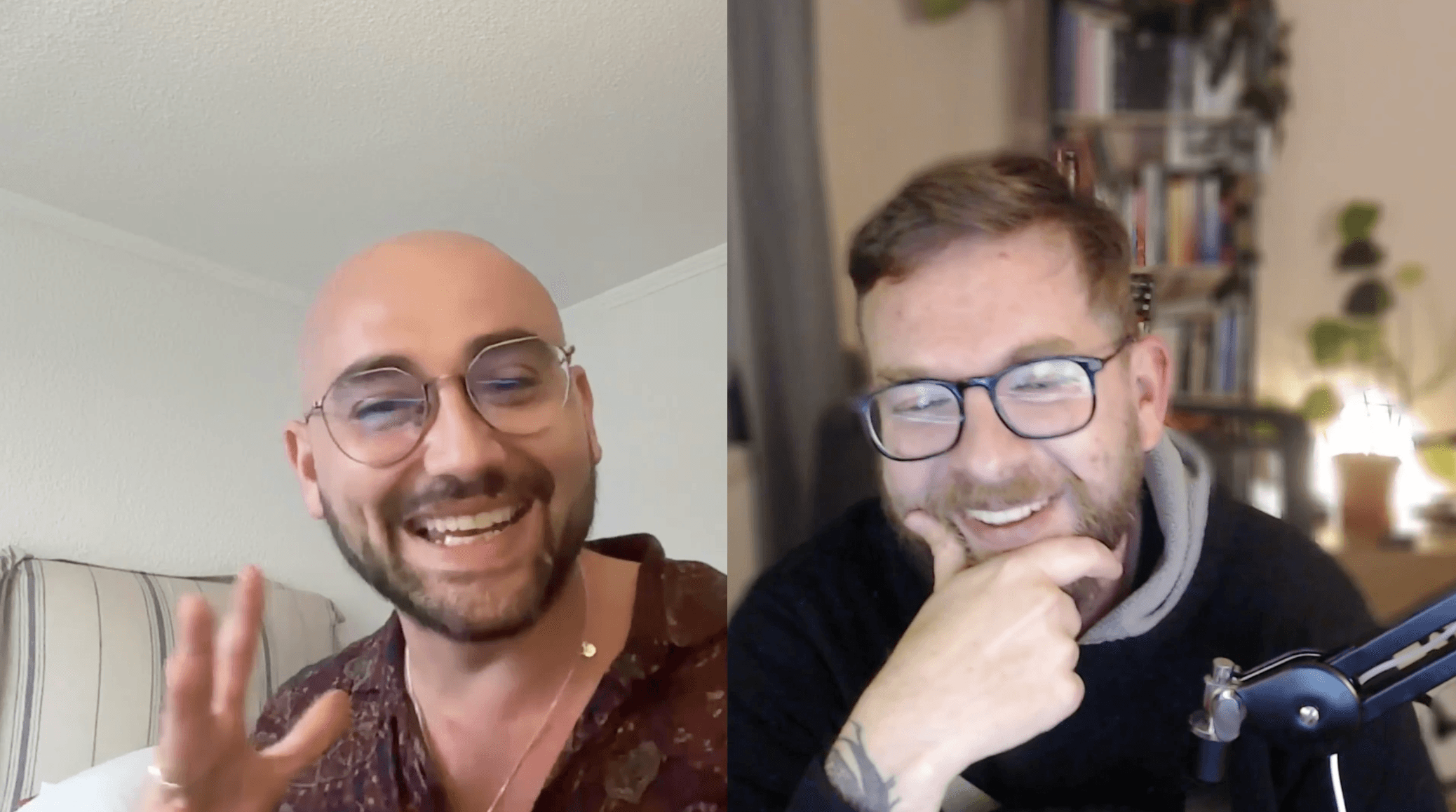
Justin Hackney joined Lukas from the Lighthouse Academy for one of their Lighthouse Live sessions. The conversation covered how Wonder Studios got started, what Real Dreams actually is, the early OpenAI days, and why the studio is structured the way it is. What follows draws on the substance of that conversation, expanded where the ideas deserve more room than a livestream allows.
Justin Hackney joined Lukas from the Lighthouse Academy for one of their Lighthouse Live sessions. The conversation covered how Wonder Studios got started, what Real Dreams actually is, the early OpenAI days, and why the studio is structured the way it is. What follows draws on the substance of that conversation, expanded where the ideas deserve more room than a livestream allows.
Why community has to come first
Lukas asked Justin what he’d learned from building Real Dreams. The answer was blunt: there are no shortcuts with community, full stop. You can’t buy it, build it on a timeline, or fake it. It’s like a friendship group. Either the trust and energy is there, or it isn’t.
He’s watched people try to package communities as marketing channels, and it always rings hollow. When he started pulling creatives together around early AI tools, he had no business plan for it. He didn’t want to package a community - that felt wrong to him. He just wanted to be around people who were asking the same questions he was. What does craft look like with these tools? Where is all of this actually heading?
What surprised him was realising he didn’t need to be the driving force forever. At first he thought he had to be the energy, constantly connecting dots, throwing events, helping people. But the good energy started coming from the group itself. It found its own momentum. He recalled looking at it one day and thinking: what have we actually made here?
The other thing he hadn’t expected was that the competition in this space can genuinely get along. Real Dreams has people from multiple studios and creative companies in the same WhatsApp group, supporting each other. He’d come from much more competitive environments in his previous work, so seeing actual kindness between people who could easily see each other as rivals was new. It shaped a lot of how he thought about Wonder when he and his co-founder Xavier Collins started building it.
Real Dreams: from a living room to three continents
Real Dreams started because of OpenAI. About four years ago, before ChatGPT existed - back when it was still called Playground and you had early DALL-E - OpenAI reached out to a small group of roughly twenty artists. Justin’s role was to help roll out DALL-E 2 to a broader creative audience.
He saw two ways to do that: online through Discord communities, which wasn’t really working, or in real life. He chose real life. Quit his job of ten years. Put his savings into running events. He started bringing creatives through his house - DOPs, filmmakers, editors, fashion designers, art historians, painters. Different people every time. Conversations running until three in the morning, generations from early DALL-E plastered all over the walls. His partner eventually asked him to please stop doing this at home.
So the whole operation moved to Shoreditch, where events ran every other day for about three months. Different creatives rotating through, testing the tools, feeding observations back to OpenAI’s engineers - what was strong, where the biases were, what could improve. From Shoreditch it went to the Bronx, then Amsterdam, then events in cities nobody had planned for.
What made it work was never the scale. The people in the room genuinely got on with each other. Everyone was exploring and sharing what they found because they wanted to, not because someone had organised a networking event. That energy still runs through Wonder now - you can feel it in the original films, in the way the studio approaches brand campaigns and music videos. It’s the same curiosity, just with better tools.
The early OpenAI period and what being first actually looks like
When OpenAI first reached out, Justin felt like the luckiest person in the world. He knew the scale of what was being attempted - a company whose stated mission was to build AGI, which he described on the podcast as “the most bonkers corporate objective I’d ever heard.” And here they were, asking him to play with their tools.
What he was working with back then was, by today’s standards, something like version 0.1 of Midjourney. Sluggy, mycelium-like, abstract art. But DALL-E changed things fast. It started understanding physics, translucency, lighting, refraction, lens choices, emotions. And because the models were far less filtered then - fewer layers of reinforcement learning stacked on top - you’d stumble into random pockets of bizarre beauty in the liminal spaces between prompts. Current tools are more powerful but they’ve also been polished smooth. You don’t find those strange corners as easily now.
That period taught him something about craft he keeps returning to. Each generation took minutes. You’d wait, and when something arrived, you’d actually study it. Think about what you’d asked and what the model had interpreted. The constraints forced intentionality with every prompt. Now you can generate hundreds of photorealistic videos with a click, and most of them look fine. But looking fine was never the point. Making something that means anything hasn’t got any easier.
That principle - substance over algorithm - runs through how Wonder operates. The studio gets into this in depth in Beyond the Loop, which documents creators with real craft working seriously with AI tools. The interesting stuff happens when intention is driving the process, not output speed.
The 50/50 model and why ownership matters
When Justin and Collins set up Wonder, the ownership model was one of the first things they got clear on. A studio and a creator can now own something fifty-fifty. You’re not selling your idea and walking away. You’re keeping hold of it, and the studio builds it with you.
The traditional industry has always extracted from creators. You’d pitch something, sign away your rights, maybe get a directing fee, and watch someone else profit from your vision for decades. AI filmmaking has changed the production cost structure enough to do deals differently. Wonder can take bets on ideas that would never have been funded before, because the cost of exploring an idea has dropped enough to make the risk bearable.
In practice, that means the studio finds creators from its community who have stories they actually need to tell - people working in animation, in documentary, in formats nobody’s named yet - and proposes making it together, with both sides owning what comes out. It’s baked into the contracts, not a handshake arrangement.
On the podcast he put it plainly: “For the first time in history, a studio and a creator can own something fifty-fifty.” The shift in production economics is what makes this possible, but it’s the ownership structure that makes it meaningful.
Where the fifteen million actually goes
People hear fundraising numbers and picture offices, servers, fancy equipment. The answer on the podcast was simpler than that. The money goes into people.
High-quality people and bets on good ideas. Ways to connect these tools to the existing industry and to the emerging creative scene growing up around AI filmmaking. Wonder has teams across multiple territories now, creatively developing and producing work at a pace that would have been absurd five years ago.
What matters to him specifically: indie film, getting these tools into schools, and making sure experienced people who’ve been steering the industry for decades have a way to collaborate with smaller studios and independent creators coming up through AI. Wonder is a partner and a bridge between those worlds. That’s where the money goes.
The studio is also investing in its own originals. Beyond the Loop Season 2 is a direct example - proper resources, proper time, real creators given the space to show what AI filmmaking looks like when someone actually cares about the result.
The Danny Boyle thread
One of the more telling parts of the Lighthouse conversation was the origin story. Justin grew up as a child actor - his first film set was 28 Days Later, directed by Danny Boyle. He played a zombie, which he’s noted is still the best job title he’s ever held. But instead of pursuing acting, he found himself watching the crew - the editor, the DOP, the art director. He wanted to understand every part of how films got made.
He ended up living near Danny Boyle for years, and the two built a close relationship. When DALL-E first arrived, Justin printed out generations and covered his walls with them. He sat Boyle down, tried to explain the technology, and watched the reaction. That moment - showing a traditional master of the craft what these new tools could do - gets at the bridge Wonder is trying to build between the old industry and the new one.
He grew up on Philip K. Dick, The Twilight Zone, Black Mirror. Built computers as a kid trying to get Unity and Unreal Engine running. He always assumed AI would come along eventually - he just thought it would be the 2030s, and he definitely didn’t think he’d have such a direct line into the early experiments. The speed of what’s happening still surprises him, he told Lukas, even though he believed in exponential curves from the start.
A renaissance, and still early
He keeps saying this is a new kind of renaissance period, and he means it. The printing press started with crisis. Cinema started with people thinking it was a gimmick. AI is in the friction phase. The people who lean in while it’s still messy and undefined are the ones who will be shaping what it becomes.
The space is still small enough that you can reach the people at the tech companies and in the creative studios doing real work. There’s less noise right now, fewer gatekeepers. That purity won’t last forever, and there’s value in being part of it while it’s still forming.
For anyone working with these tools already, or circling around them wondering whether to jump in, the community Wonder has built is where a lot of this conversation happens. The work is visible across the originals, the agency projects, and Beyond the Loop. The community itself is open. Most of the people doing serious work in AI storytelling already know each other. The room is still small enough to join.