Wonder Team
The noise sharpens into a signal. Instead of dozens of side threads repeating the same struggles in different forms, you get patterns. Suddenly you can see what problems everyone is really facing, which solutions actually stick and what systems we can build to support the challenges.
Ideas compound. A hack in one corner of the world collides with an experiment from another, and together they spark something neither creator could have built alone. It’s like when you leverage your work, like asking one trained ChatGPT to give you the configuration for a new one that stems from it. That’s how new standards form, from shared experience, from shared trial and error.
Momentum builds. In isolation, each of us feels like we’re testing in the dark. In community, the work feels less risky, less lonely. You move faster because others are running alongside you. And finally it feels like you’re expediting the construction of the architecture to handle the expediting changes we are witnessing.
And then what happens? The scattered fragments of an industry start to look like an industry.
It’s a community. A collective building its own future in real time.
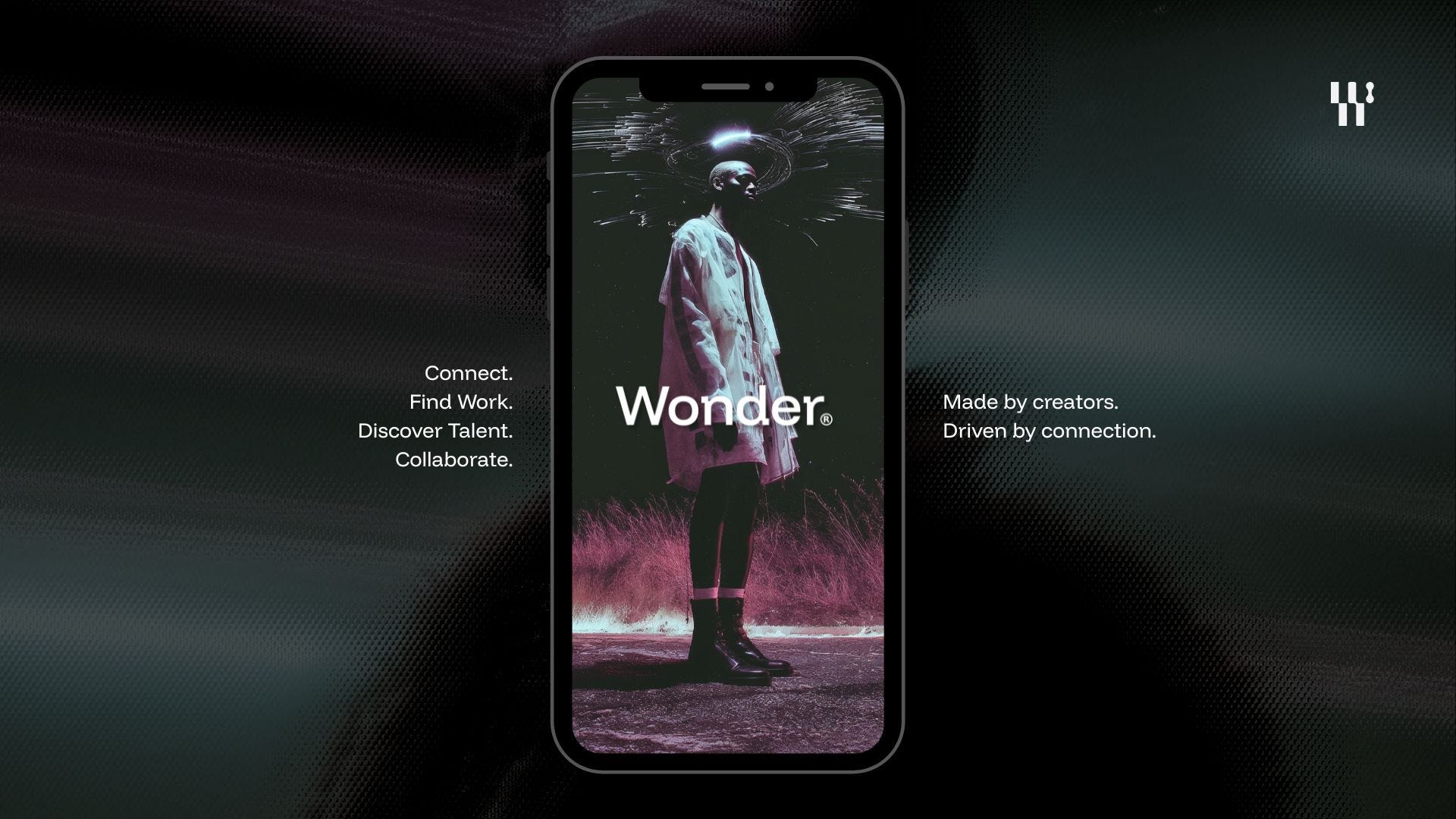
It’s Wonder. It finally launched.
Cinema has always been collaborative, but collaboration itself is being rewritten. The roles are shifting: editors becoming prompt designers, art directors doubling as machine trainers, producers learning to architect hybrid pipelines. No one has the full map, and that’s the point: the map (however you envision it...node-based? Epic Lord of the Rings-style? Vatican map room-aesthetic?), it only emerges when we sketch it together.
When these fragmented conversations converge, the pace of discovery multiplies. A budget hack in Milan collides with a workflow breakthrough in Mumbai. An ethics guide supports a rights clearance issue that was holding up a massive project, and all of this sparks a new standard for hybrid productions. Piece by piece, the architecture of a new film industry takes shape - built in real time by the community itself.
We’re spread all over: I move between Switzerland and Italy, others are in Europe, the U.S., Asia. Along the way I’ve joined countless Discords, Slacks, WhatsApp groups. They’ve been useful, but always fragmented (not to mention at all time zones). One conversation hidden in a DM, another buried in a thread, a third scattered across LinkedIn.
When Wonder opened up, I assumed it might be another space like that. But when I was invited to the platform, I had to try it. The very first thread I landed on asked:
“Where have you cut costs without losing quality, and where have expenses grown as AI reshapes development through post?”
It felt fresh because people were blunt: shrinking crews, hybrid job roles, legal headaches with AI assets, budget stacks for indies versus studios. One producer wrote: “The smart use of AI tools and agents has gone from optional to necessary. Teams are becoming smaller, more modular.”
I felt relief that others were wrestling with the same questions I’ve been carrying into my own projects, whether feature-length documentaries or fast-turnaround commercial gigs.
That’s when it hit me. Wonder is more than a place to scroll. It’s where you can play alongside other dreamers.
Stepping into Wonder
One of my favourite recent posts was by Aaron, aka B1TBOY: a girl sketches a spaceship that morphs into a 3D model, then into an astronaut helmet, and finally into a seat on a shuttle that lands her on the moon, all in one seamless start-frame-to-end-frame shot. That’s the kind of imaginative introduction you get in Wonder.
The first thing I noticed is the sheer range of people here. Not just filmmakers like me, but microdrama creators, educators, VFX experts, creative technologists, ML developers and even people working at the intersections of health policy and neurotech. Heavy hitters post alongside new voices whose experiments make me rethink my own practice.
With about 400 members so far (you’d recognise the names: Paula Vivas, PJ Ace, Jagger Waters, Brogan Wassell and Minh Do), it could feel overwhelming, but the filter function makes it easy to find people by role, keywords, or location. (Am I really the only one in Switzerland?)
In the Creative category alone, I’ve seen posts on everything from achieving character continuity across clips, to building a mafia noir trailer workflow, to destructive environment testing. There are museum commissions, early tool invites, and very practical budget checklists: Do you need LoRAs? What about lip-sync? Hybrid or fully AI? This is the nitty-gritty of a new cinematic industry taking shape, and the AI summary feature makes it easier to catch up on long posts without drowning.
Then there are User Spaces, which feel like little worlds with distinct personalities. Wonder had to slow them down at first because too many were sprouting, but you can now apply for new ones. The cultural hubs are lively: Ze Germans, Italian Community, Indian Filmmakers, Dutch Community, The Norwegian Community, and yes, even America.
Feeds for the “SuperAIHuman”
What I love most about Wonder is the mix. The feed reads like a mosaic of projects, reflections, and experiments, but beneath that variety is a shared purpose. Wonder built this space so people could connect, find collaborators, share their work, and tap into the wider scene. To see that vision take shape is very interesting and makes me want to sign in every day to not miss the latest news/hacks/art and also what others think about it...the comments are just as interesting as the posts.
There’s the Prompt Lab, a room for testing prompts together and learning in public. Another space, aptly called the “big elephant in the room,” is meant to hold frank conversations about legal knots that everyone faces but few want to say out loud.
Other posts focus on workflows and making knowledge usable with step-by-step guides for mock-ups in Adobe Firefly with Nano Banana, threads on managing edges when upscaling or experiments that cross disciplines like vibe coding. Some are deeply personal: Soojung Kwon animating from his own drawings, or Amandine LeBlanc posting stills that feel like a poem to love. There’s a skating-to-snowboarding transition using Nanobanana; Martin LeBlanc’s meticulous Premiere workflow for blending AI videos seamlessly with motion blur in a start frame/end frame workflow. These are the kind of workflow gems I used to chase across ten apps. Now they’re in one place.
There are also in depth shares about projects that build the case studies we all crave. One post shared the PUMA x Manchester City campaign, where fans designed jerseys through an AI creator. The project generated 180,000 designs and over a million votes, with the winning kit set to be worn on pitch in 2026/27. From an individual prompt to a global stadium - that’s the kind of leap that shows what’s possible when creativity and community collide.
This is why Wonder exists. To cut through the noise and give space for pioneers and builders to show their work, to trade what they’ve learned, and to make sense of a fast-moving field together. And to do this all together.
In fact, more than a cradle for ideas, there are invitations to collaborate on real projects: a commission from the French Ministry of Culture for the Bicentennial of Photography; a museum commission for motion loops; calls for partners to animate photographic archives for brands; job posts for AI motion designers, creative writers, and more. Opportunities feel woven directly into the conversations.
And obviously each creator will be attracted to the conversation that speaks most to them. One creator wrote: “The most incredible power of AI is imagining something that never existed before… Taking something frozen in the past and making it alive.” I thought instantly of the extensive work I’ve been doing on my father’s Radical Architecture 9999 Group archive, starting with my film Radical Landscapes, and now expanding it to more. Whatever the project, Wonder makes you Wonder deeper about it.
Content saturation is real so a filter like Wonder feels essential and the Chat section is where that filter really comes alive. Recent threads ranged from playful (a Lewis Capaldi AI music video, Google’s new Mixboard feature, though frustratingly US-only for now) to existential.
One post sparked a lively debate: what do we even call ourselves? We’ve all seen terms like AI Artist or AI Expert or AI Art Director. Suggestions poured in: AI Architect, AFX (AI + VFX), GVFX (Generative VFX), AI Creative...even SuperAIHuman. Maybe I should try that!
Titles may feel slippery right now, but the conversation itself points to something bigger: we’re not just using tools, we’re shaping entirely new roles.
Whatever You Call It
AI cinema moves so quickly it can be dizzying. I teach workshops where tools, techniques and workflows change week to week (sometimes day to day). I make films with tools that are still in beta. My own path, from journalism and lifestyle magazines to being a one-woman-band filmmaker, to leading large crews and feature films, has always meant piecing knowledge together across silos. Now more than ever.
Wonder is where those silos dissolve. Here I can see how someone in Mumbai uses a tool differently than someone in LA, how London and Amsterdam debate vocabulary, how an ad creative thinks about story compared to a documentary filmmaker, how workflows shift when you’re working for a brand versus yourself.
For me, the value isn’t in the features like Spaces, Jobs, Events, Chat. It’s in the lived exchanges: the unpolished posts, the shared frustrations, the generous hacks. That intimacy, that sense of being together, makes Wonder feel less like an app and more like a collective lab.
Just the Beginning
Wonder is young, and that’s its beauty. It feels alive, shaped by the people inside. Some days it’s quiet, some days it’s buzzing, but it always feels like a space in motion.
That’s the real purpose of Wonder: to dissolve silos, to make visible the messy but vital conversations that shape our industry. It matters because the future of AI cinema is being built by all of us, together.
I keep thinking of that first budget thread. In the past, those conversations would’ve been whispered in the back of a festival lounge or hidden in private chats. Now they’re happening out in one space. Threaded, searchable, global.
This is the beginning of being able to create, learn, and dream in the company of others.
Elettra & The Wonder Collective